
Why Do I Keep Forgetting English Words I Already Learned?
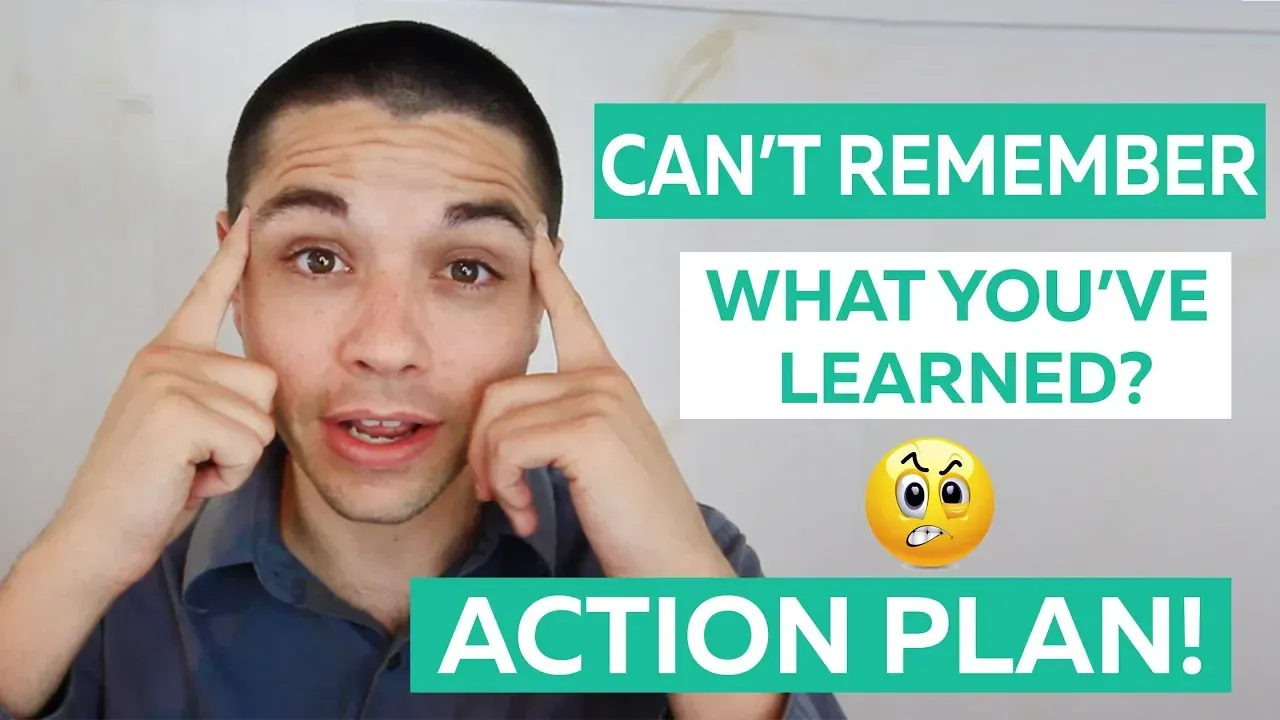
🚀 Why Do I Keep Forgetting English Words I Already Learned?
You study a word, you feel good about it, and three days later it's just gone. If that sounds like you, I want you to know right now: it's not your memory. It's your method. Let's fix it.
So this is one of the most common messages I get: "Chris, I learn new words every day, I write them down, I even make flashcards, and I still forget them a week later. What's wrong with me?"
Nothing is wrong with you. Nothing at all. Your brain is doing exactly what brains are designed to do: throw away information it doesn't think it needs. The good news is, you can teach your brain that a word matters, and once you do that, it sticks.
⚠️ The Myth: "I Just Have a Bad Memory"
I hear this all the time, and it's almost never true. Most people don't have a bad memory, they have a bad system. Writing a word down once and never looking at it again isn't a memory problem, it's a review problem. Fix the system, and the "bad memory" disappears.
🎯 Understand Native Speakers But Can't Speak Yourself?
If you understand what native speakers say but struggle to speak English fluently yourself, you're not alone. Discover the #1 reason why this happens and how to fix it.
🎥 Watch This Free 16-Minute Lesson🎯 6 Things to Do Instead of Just Writing It Down
There's a steep drop in memory in the first 24 hours after you learn something new. If you don't use the word again within that window, your brain quietly decides it wasn't important. So the very same day you learn a word, say it, write it, or text it to a friend. Just touch it once more before you sleep.
Your brain remembers stories, feelings, and pictures much better than it remembers rows of words on a page. So instead of "generous, adjective, kind and giving," picture your actual grandmother, think about the time she gave you her last piece of cake, and say "My grandmother is so generous." Now the word has a home in your memory.
Here's the trick: look at a new word today, then again tomorrow, then again in three days, then again in a week. Each time you review it a little further apart, and each time it gets stronger in your memory. This is called spaced repetition, and it sounds technical, but really it just means: don't say goodbye to a word after the first date.
Now you might be thinking, "Chris, that sounds like a lot of extra work." I get it, but here's the thing, it's actually less work than what you're doing now, which is learning the same word over and over because you keep forgetting it.
🚀 Ready to Speak English with Confidence in Just 30 Days?
Join thousands of ESL learners who have transformed their English speaking skills. Discover proven techniques that work for busy adults.
🎓 Register for Free Seminar: "How to Speak Better English in 30 Days"When you say a word out loud, your brain gets extra information: how it feels in your mouth, how it sounds in your ears. That's more places for the memory to stick. Reading a word silently is the weakest way to learn it. Saying it, even alone in your room, is far stronger.
"The cat sat on the mat" doesn't mean anything to you, so your brain doesn't bother keeping it. But a sentence about your actual job, your actual family, your actual weekend plans, that your brain will hold onto, because it's relevant to you.
💡 Pro Tip From Chris
Stop trying to learn 20 new words in one sitting. Your brain can only hold onto so much at once. Five or six words, done properly with review, beats twenty words you'll forget by Friday every single time.
You don't need a classroom. Explain the word to a friend, a study partner, or even out loud to yourself, like you're the teacher. When you have to explain something clearly, you understand it on a completely different level, and it becomes almost impossible to forget.
🔑 The Real Secret: It's Not About Trying Harder
Here's what I want you to take away from this: forgetting words doesn't mean you're not trying hard enough. A lot of my students are trying so hard, and still forgetting, because trying harder with the wrong method just wastes energy. Trying smarter, with review, context, and speaking out loud, that's what actually works.
It's impossible for these words not to stick if you touch them again within a day, connect them to your real life, and say them out loud more than once. That combination just works.
📧 Join Our English-Everyday Speaking Community
Get exclusive vocabulary lessons, pronunciation tips, and fluency strategies delivered directly to your inbox. Join thousands of ESL learners transforming their English skills!
📚 Your Homework This Week
Take the last five words you learned and forgot, yes, the ones you can barely remember now. Write one sentence for each about your real life, say each sentence out loud three times, and check back on them tomorrow, then again in three days. Watch how differently they stick this time.
Be patient with the process. You're not fixing a bad memory, you're building a better system, and that gets easier every single week you keep doing it.
💡 Final Pro Tip
Keep one running list of "words I keep forgetting." Every time one slips your mind, add it here instead of feeling bad about it. Review this specific list a little more often than your new words, these are the ones that need the extra attention.
So, why do you keep forgetting English words? Because you were only meeting them once. Meet them again, and again, out loud, in your own life, and forgetting stops being the problem it used to be.
🎙️ Watch the Full Lesson
Want to see me explain this whole system in more detail? Here's the full video:


