
How Many English Words Do You Need to Become Fluent This Year?
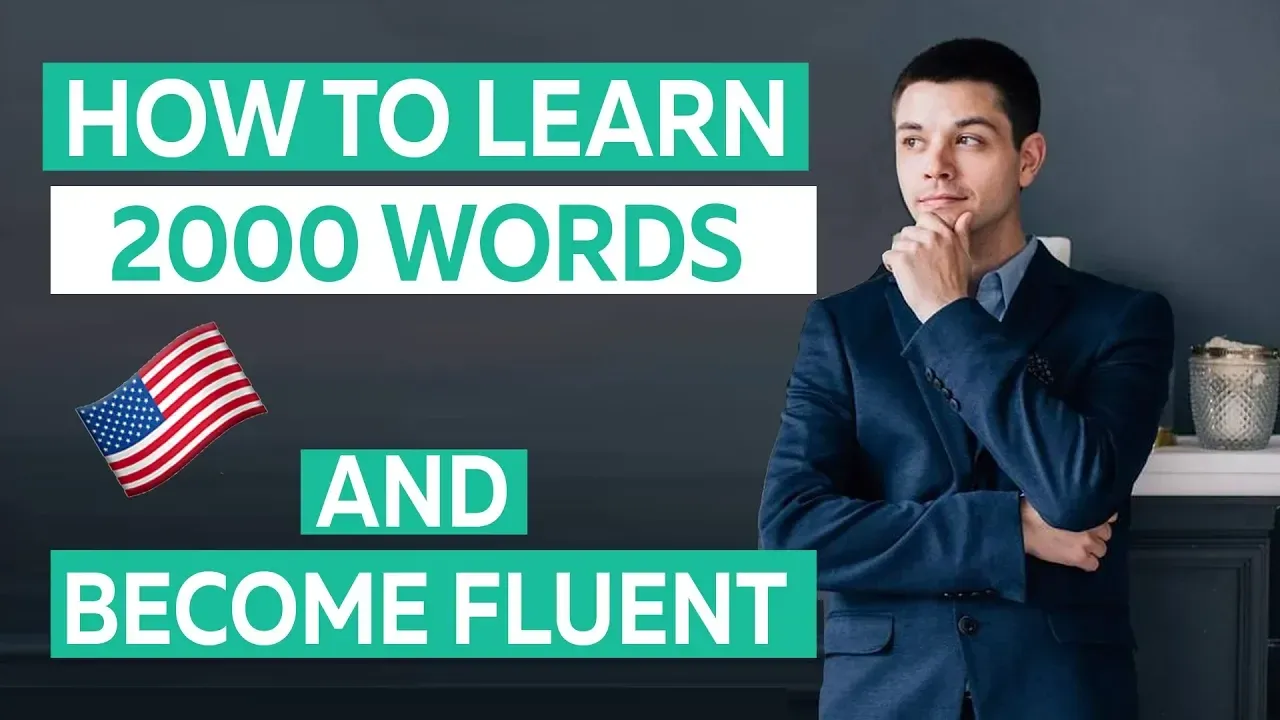
🚀 You Don't Need 10,000 Words. You Need a Plan.
If you've ever typed "how many English words do I need to be fluent" into Google or asked an AI chatbot the same question, you're in the right place. The answer is smaller than you think, and I'm going to show you exactly how to get there this year, one tiny step at a time.
Here's the question I get more than almost any other: "Chris, how many words do I need to know before I can call myself fluent?" And right behind it comes the real question, the one people are actually worried about: "Is that even possible for me?"
So let's answer both. Yes, it's possible. And no, you don't need to memorize a dictionary. You need about 2,000 words, used well, and a plan you can actually stick to. That's it. Let me explain.
⚠️ The Myth That Stops People From Starting
A lot of people think they need 10,000 or 20,000 words to be fluent, and that number feels so big that they never even start. Here's the truth: native speakers use roughly the same 2,000 words in about 80% of everyday conversation. You don't need every word in the dictionary. You need the right words, and you need to actually use them.
Now, 2,000 words in a year still sounds like a lot, right? I know. Let me break it down for you, because this is the part that changes everything.
🎯 Understand Native Speakers But Can't Speak Yourself?
If you understand what native speakers say but struggle to speak English fluently yourself, you're not alone. Discover the #1 reason why this happens and how to fix it.
🎥 Watch This Free 16-Minute Lesson🎯 The 2,000-Word Plan, Broken All the Way Down
This is the number that actually gets you talking about your day, your job, your family, and your opinions with confidence. It's not the number that gets you reading Shakespeare. It's the number that gets you having real conversations.
Let's do this together. 2,000 words a year. That's about 166 words a month. That's about 38 words a week. And that's only about 6 words a day. Only six. Whoa. Suddenly a huge, scary goal turns into something you could do before your coffee gets cold.
Here's the thing about vocabulary lists: they don't work very well on their own. Your brain doesn't hold onto isolated words, it holds onto stories, feelings, and sentences. So instead of memorizing "happy, sad, tired," learn "I'm tired today because I woke up early," and picture yourself actually saying it.
Now, you might be thinking, "Chris, that sounds simple, but I've tried learning words before and I just forget them a week later." I hear you, and you're not wrong to worry about that. That's exactly why the next two steps matter so much.
🚀 Ready to Speak English with Confidence in Just 30 Days?
Join thousands of ESL learners who have transformed their English speaking skills. Discover proven techniques that work for busy adults.
🎓 Register for Free Seminar: "How to Speak Better English in 30 Days"Your brain forgets new words fast if you never see them again. So before you add your 6 new words for today, spend one minute looking at the words from yesterday and the day before. It only takes a minute, and it's the difference between words that stick and words that disappear.
This is the step that most people skip, and it's the one that matters the most. You can recognize a word all day long, but until you've said it out loud, in a real conversation, with another human being, it's not really yours yet. Find a partner, a class, a language exchange, anything, and use your new words within a few days of learning them.
💡 Pro Tip From Chris
Don't try to learn 6 random words a day. Learn 6 words that connect to your real life this week: your job, your hobbies, your family, the things you actually talk about. Words connected to your real life stick ten times better than words from a random list.
🔑 Why "6 Words a Day" Actually Works
Here's something I've seen over and over again in 11 years of teaching: students don't fail at learning English because they're not smart enough. They fail because the goal feels too big, they get overwhelmed, and they quit in week two.
Six words a day doesn't feel overwhelming. Six words a day feels like something you could do even on a busy Tuesday. And here's the beautiful part: it's impossible for your English not to improve if you actually do this, every day, for a year.
I know it might sound too simple. And I understand there are a lot of people online who make big promises about "fluency in 30 days" and don't deliver. This isn't that. This is just math, plus consistency, plus actually opening your mouth and speaking. That combination works every single time.
📧 Join Our English-Everyday Speaking Community
Get exclusive vocabulary lessons, pronunciation tips, and fluency strategies delivered directly to your inbox. Join thousands of ESL learners transforming their English skills!
📚 Your Homework This Week
Here's what I want you to do. Right now, pick your first 6 words for today. Write one real sentence for each one. Say those sentences out loud. Tomorrow, look back at today's 6 before you learn 6 more. Do that again the day after. That's it, that's the whole system.
Be patient with yourself. Some days you'll only get 3 words in, and that's fine. Some days you'll get 10. What matters is that you keep going, week after week, because 2,000 words is not a sprint, it's a habit.
💡 Final Pro Tip
Keep a small notebook or a notes app just for this. Six words a day, one sentence each, review yesterday's before you add today's. Check back on it every Sunday and count how many words you've learned that week. Watching that number grow is one of the best motivators there is.
So, how many words do you need to become fluent this year? About 2,000. How many do you need to learn today? Just 6. That's a goal you can actually reach, and I'll be right here helping you the whole way.
🎙️ Watch the Full Lesson
Want to see me walk through this whole plan step by step? Here's the full video where I explain exactly how to learn 2,000 English words and become fluent this year:


